
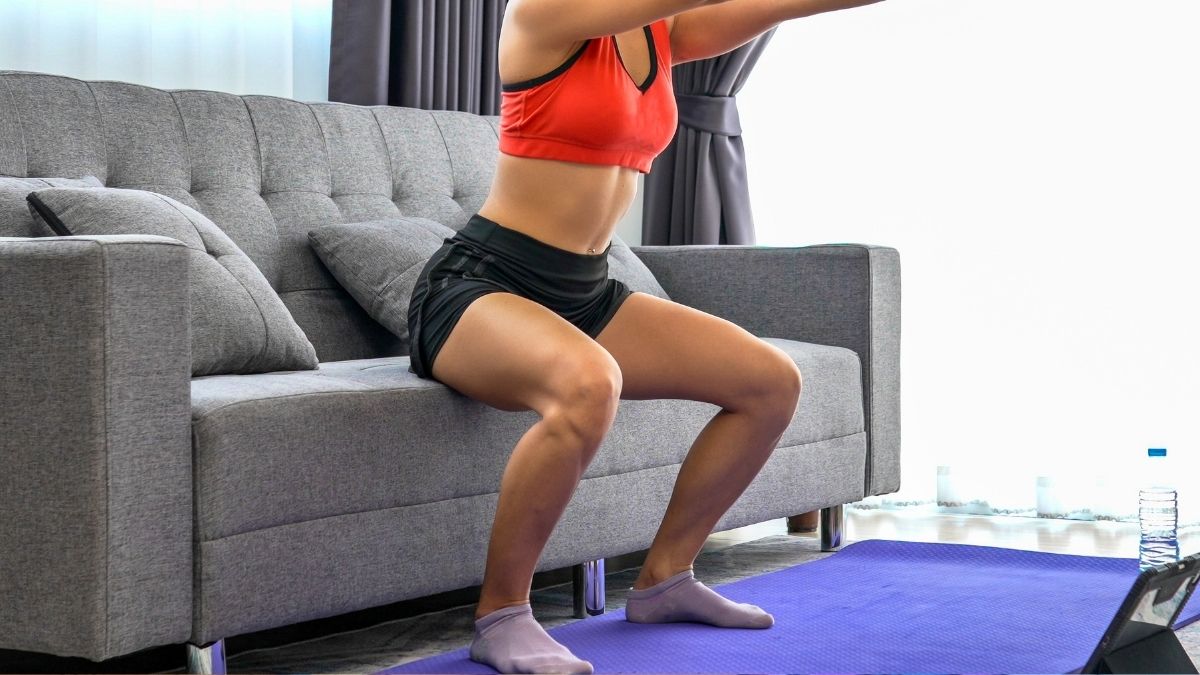
Chair squats are a beginner-friendly lower body exercise that builds leg strength, improves balance, and supports everyday movement. Ideal for all fitness levels.

Chair squats are one of the most practical and approachable lower body exercises you can do. They use a simple household chair to help guide proper movement while building strength in the legs, hips, and core. Whether you are new to exercise, returning after time off, or looking for a joint-friendly option, chair squats provide a safe and effective way to improve lower body strength.
Because chair squats closely mimic everyday movements like sitting down and standing up, they are especially valuable for functional fitness. Practicing this motion regularly helps support independence, confidence, and mobility at any age.
What Are Chair Squats
Chair squats are a modified version of a traditional squat where you use a chair as a guide or target. You lower your body toward the chair and lightly touch or sit before standing back up. The chair provides reassurance, balance support, and consistent depth for each repetition.
This exercise reduces fear of falling, encourages proper squat mechanics, and limits unnecessary strain on the knees and lower back. Chair squats are often used in beginner programs, senior fitness, rehabilitation settings, and arthritis-friendly workouts.
Benefits of Chair Squats
Chair squats offer powerful benefits despite their simplicity. They strengthen the lower body while reinforcing proper movement patterns that carry over into daily life.
Key benefits include:
- Increased leg and hip strength
- Improved balance and stability
- Better knee and hip joint support
- Enhanced posture and body awareness
- Greater confidence with movement
- Reduced risk of falls
Because they are low-impact, chair squats can be performed regularly without excessive joint stress.
Muscles Worked During Chair Squats
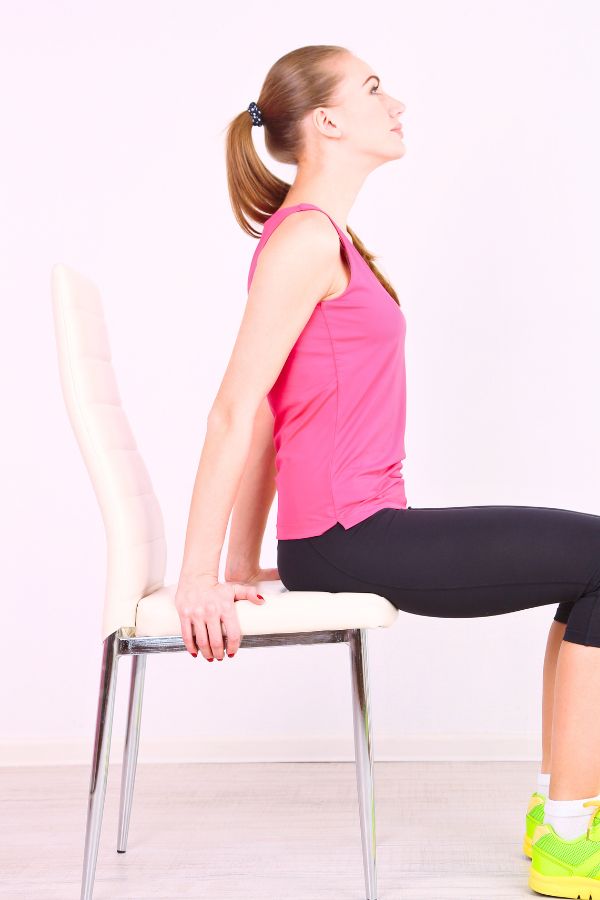
Chair squats engage several major muscle groups at once, making them an efficient lower body exercise.
Primary muscles worked:
- Glutes
- Quadriceps
- Hamstrings
Supporting muscles:
- Core muscles
- Hip stabilizers
- Lower back muscles
This full-body involvement helps improve coordination and overall strength, not just isolated muscle tone.
Proper Chair Squat Form
Using proper form ensures chair squats remain safe and effective.
Start by standing in front of a sturdy chair with your feet about hip-width apart. Your toes should point slightly outward, and your weight should stay evenly distributed through your feet.
Begin the movement by pushing your hips back as if you are going to sit down. Lower yourself slowly toward the chair, keeping your chest lifted and core engaged. Lightly touch the chair or sit briefly, then press through your heels to stand back up.
Key form tips:
- Keep your knees tracking over your toes
- Maintain a tall chest and neutral spine
- Engage your core throughout the movement
- Move slowly and with control
Using your arms for balance is fine, especially in the beginning.

Chair Squats Workout Routine
Chair squats can be used as a standalone exercise or as part of a full lower body workout. Perform 2–3 sets with controlled repetitions, resting briefly between sets.
Basic chair squats
This standard version focuses on smooth, controlled movement and is ideal for beginners.
Chair squats with pause
Pause briefly on the chair before standing back up. This builds strength and control while reducing momentum.
Chair squats with arms raised
Raising your arms in front of you helps improve balance and posture while adding a small challenge.
Supported chair squats
Holding onto the chair or a nearby surface provides extra stability for those who need it.
Who Should Do Chair Squats
Chair squats are suitable for a wide range of people and fitness levels.
They are especially helpful for:
- Beginners starting strength training
- Seniors focusing on functional movement
- People with knee or hip sensitivity
- Those managing arthritis or joint stiffness
- Anyone rebuilding strength after inactivity
Chair squats allow you to work within your comfort zone while still making meaningful progress.
Progressing Beyond Chair Squats
As strength improves, chair squats can be progressed gradually.
Ways to increase challenge include:
- Standing up without fully sitting
- Slowing down the lowering phase
- Increasing repetitions or sets
- Holding light weights
- Transitioning to bodyweight squats
Progression should always feel manageable and pain-free.
Common Chair Squat Mistakes to Avoid
Small form mistakes can reduce the effectiveness of chair squats.
Common issues include:
- Dropping quickly onto the chair
- Letting knees collapse inward
- Leaning too far forward
- Using momentum instead of control
Focusing on slow, controlled movement leads to better results and safer training.
How Often Should You Do Chair Squats
Chair squats can be performed frequently due to their low-impact nature. Most people can safely do them 2–4 times per week, depending on overall activity level.
They pair well with walking, stretching, and gentle upper body exercises for a balanced routine.
Chair squats are a simple yet powerful exercise that supports strength, mobility, and confidence. They help train the body for real-life movement while protecting joints and encouraging proper form.
Whether you are building strength from the ground up or maintaining mobility as you age, chair squats are a reliable tool for long-term health and independence.



No comments! Be the first commenter?